The AI Killer App Might Be EdTech
The real opportunity is using AI to deeply assess what a child knows, identify what they don’t know, and build a completely personalized path forward.
July 13, 2026
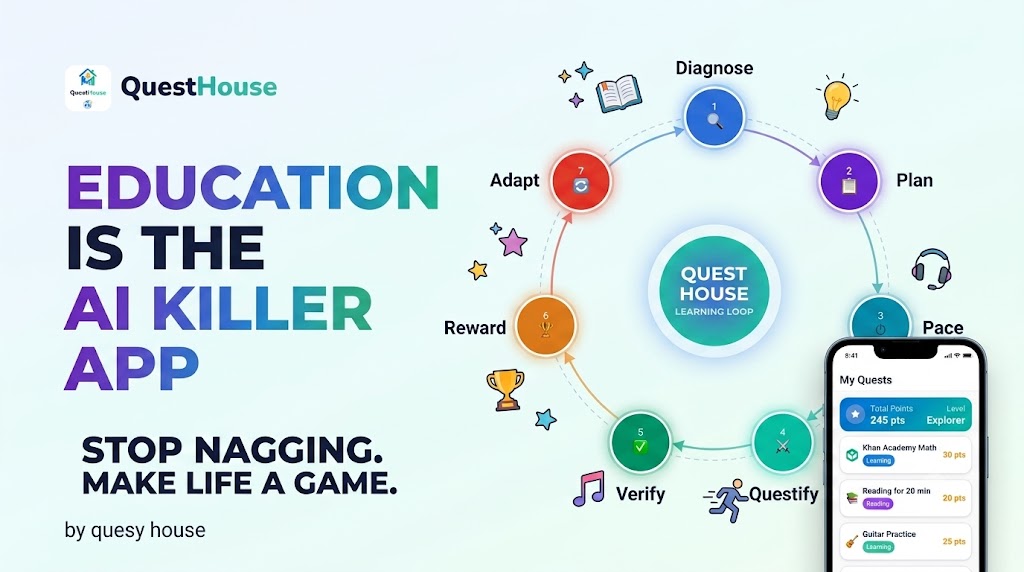
For decades, educational technology has failed to live up to its promise.
We were told technology would revolutionize the classroom. Instead, we got digital worksheets, multiple-choice apps, and more screen time. The format changed, but the underlying process remained largely the same.
Artificial intelligence has the potential to finally change this.
The killer application for AI in education isn’t a chatbot that talks to your child.
It isn’t an AI tutor that provides answers. And it certainly isn’t software that writes essays for students.
The real opportunity is using AI to deeply assess what a child knows, identify what they don’t know, and build a completely personalized path forward.
The Grade-Level Model Is Broken
The traditional education system operates on a factory model.
If a child is nine years old, they are placed in fourth grade. It doesn’t matter if they are reading at a sixth-grade level but struggling with third-grade fractions. The conveyor belt continues moving forward.
Every student receives roughly the same material, at roughly the same pace, based primarily on age.
The result?
Some children are bored because the work is too easy. Others are frustrated because they are missing foundational skills. Many experience both at the same time, depending on the subject.
Wouldn’t it be better to organize education around what a child actually knows rather than how old they are?
This is where AI becomes valuable.
A deep, adaptive assessment can map a child’s knowledge down to the individual concept. It can identify the small, hidden gaps that traditional testing misses.
A student may appear to be struggling with algebra, for example, when the real problem is a missing rule involving fractions learned several years earlier. Until that foundational gap is identified, additional algebra instruction simply creates more frustration.
AI can make these gaps visible.
Deep Assessment Engine Identifies hidden skills and knowledge gaps ↓ Dynamic Curriculum Plan Creates a unique learning roadmap for the student ↓ Focused Learning Sprint Targets the next concept the student is ready to master
Thirty Focused Minutes Can Beat Three Hours of Homework
Once the gaps are identified, the software shouldn’t drop a massive textbook on the kitchen table.
It should create a practical, week-by-week curriculum based on the child’s current abilities and the next skills they need to develop.
This makes focused, high-intensity learning possible.
When the work is too easy, children become bored. When it is too difficult, they become discouraged. But when the material sits at the edge of their current capability, they become engaged.
They make progress because the work is relevant.
Instead of spending three hours completing generic assignments, a student can spend 30 focused minutes working on the exact concept they need to master next.
This isn’t about making education easier. It is about removing wasted effort.
Traditional homework often measures compliance rather than understanding. A personalized system focuses on mastery.
Why force a child to complete 30 problems covering something they already understand? Why move them forward when they haven’t mastered the concept underneath the next lesson?
A better system would continuously assess, adjust, and advance.
A Better Framework for Parents
This assessment and planning engine can also become the foundation of a modern home-learning framework.
Most parents aren’t trained teachers or curriculum designers. They shouldn’t be expected to determine which foundational math concept their child missed two years ago.
Software can handle that work.
It can identify what the child needs to learn, establish the appropriate pace, recommend the next activity, and verify mastery before moving forward.
This changes the parent’s role.
Instead of becoming the exhausted homework enforcer, the parent can become a coach and supporter.
You stop guessing whether your child is falling behind.
You stop arguing over assignments that may have little educational value.
You gain a clear view of what they know, what they are working on, and what they have mastered.
The technology handles the process. The child focuses on progress. The parent sees the results.
For years, educational technology simply digitized the existing system. AI gives us the opportunity to redesign it.
Not around classrooms. Not around textbooks. Not around grade levels.
Around the individual child.
Share this post